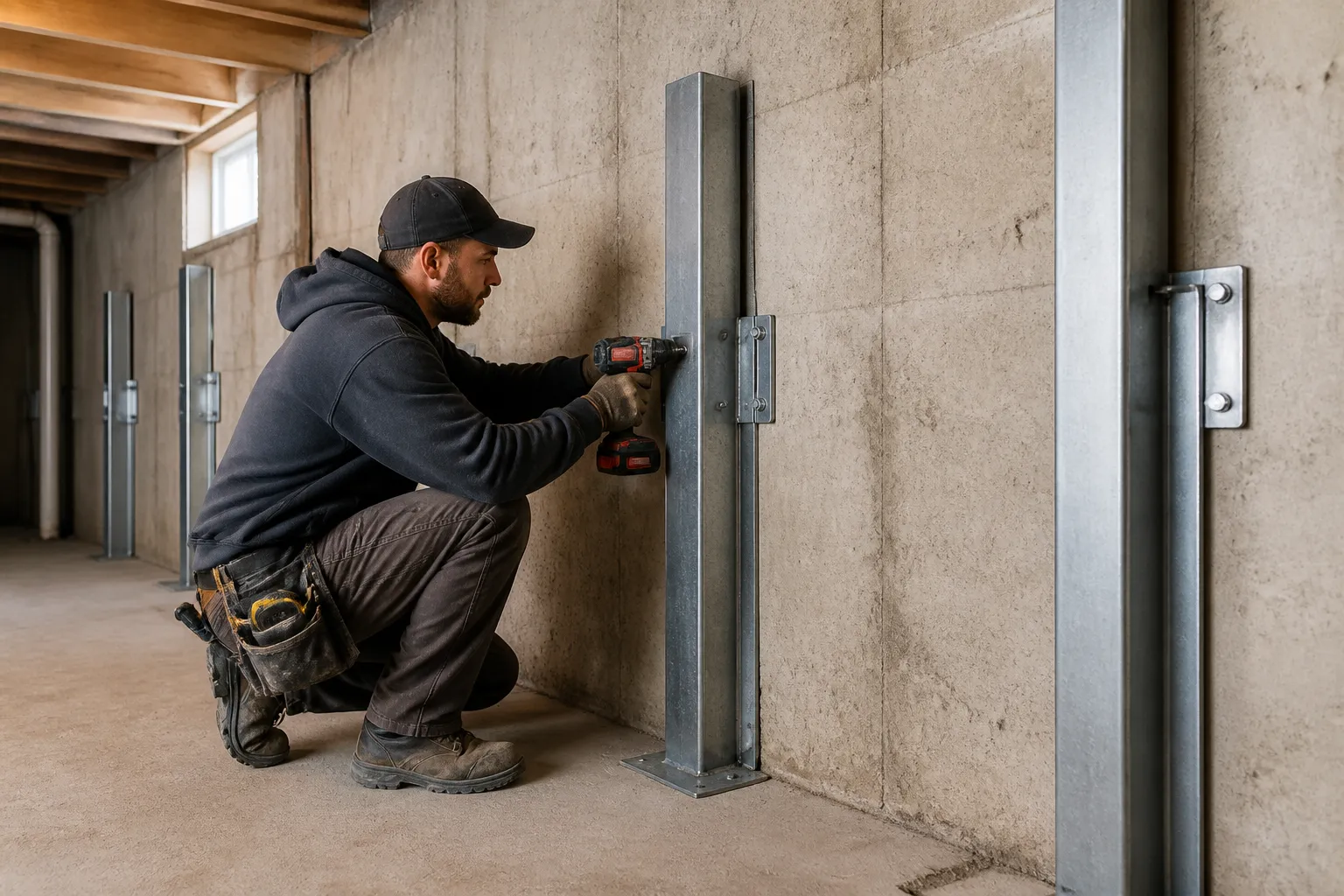
Cracks along the wall, a slight inward curve, or gaps where the floor meets the basement wall are signs worth taking seriously. If your basement walls are changing shape, it can start with small movement and turn into a much bigger structural concern.
Winnipeg Waterproofing helps homeowners in Winnipeg, MB R3L 1Z3 address wall movement with Basement Wall Bracing that is chosen for the condition of the wall, the source of the stress, and the long-term needs of the home. The next step is a direct inspection so we can see what the wall is telling us and recommend a practical repair path.
Basement wall problems do not always begin with a dramatic failure. Many homes show earlier warning signs that are easy to overlook if you only glance at the surface.
If one or more of these signs are present, the wall may need bracing before the movement becomes more pronounced.
Basement Wall Bracing is used to stabilize a wall that has shifted, bowed, or lost strength from pressure and movement. The goal is not to hide the problem. The goal is to support the wall and reduce the chance of further distortion.
At Winnipeg Waterproofing, we look at the wall as part of the whole basement system. A wall can be stressed by soil pressure, moisture, foundation strain, or an opening that has already begun to spread. Bracing helps address the structural side of that problem while we also consider whether drainage, crack repair, sump pump work, or foundation waterproofing should be part of the solution.
Bracing is often considered when the wall shows movement but still has enough strength to be stabilized. That makes timing important. Waiting too long can reduce the options available for repair.
Bracing is not a cosmetic fix. It will not simply cover over a problem wall and make it disappear. It is a structural support method meant to help a compromised wall hold its shape and resist further movement.
Before any bracing work begins, we look closely at the wall and the surrounding basement conditions. That helps us avoid treating only the surface symptoms.
We inspect the cracking, bowing, and any visible signs of stress along the basement wall.
We look for seepage, damp spots, and signs that water has been contributing to the problem.
We consider whether the movement is linked to structural pressure, foundation strain, or another condition that should be addressed alongside bracing.
We explain the available approach and outline what the work is intended to stabilize.
This step matters because a wall that is stressed by outside pressure may need a different response than one that has a localized crack or one that is also taking on moisture.
Different walls need different support methods. The right option depends on how the wall is moving and how much strain it is showing.
Some walls need added support to hold the current shape and reduce further inward movement. This type of work is focused on strengthening the wall where it has started to weaken.
If wall movement has opened a crack, that opening may need attention along with the bracing plan. In some cases, foundation crack repair or epoxy crack injection can be part of the broader solution.
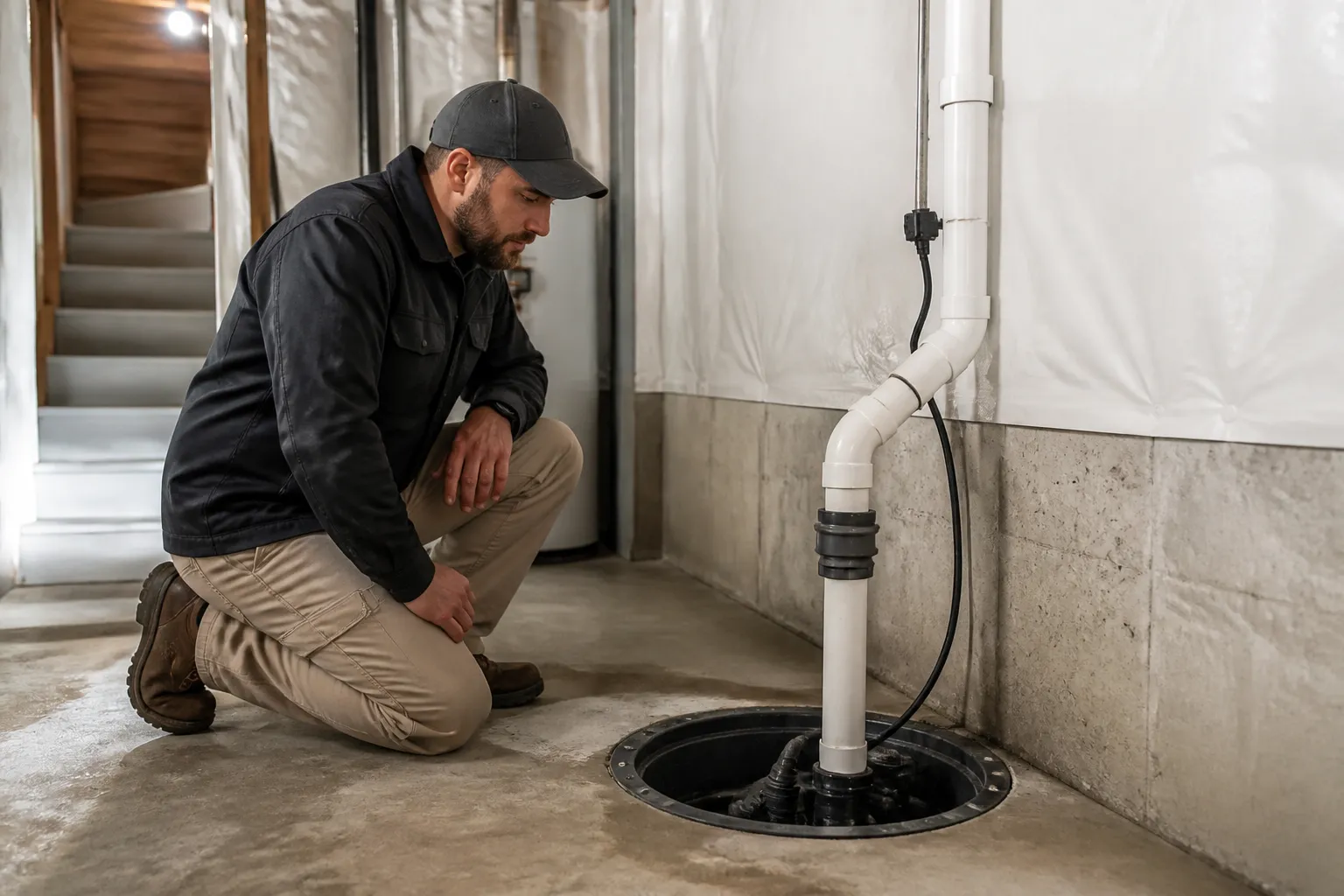
When seepage is part of the problem, basement waterproofing or foundation waterproofing may help reduce the moisture that is putting extra stress on the structure.
Homeowners often notice wall bracing needs only after the basement begins showing visible changes. The issue may not feel urgent at first, but it can become harder to manage if ignored.
These signs often point to a wall that needs more than patching. A bracing plan can help support the wall while also allowing related problems to be addressed at the same time.
Winnipeg Waterproofing works with homeowners who want a direct answer, not a temporary patch. We focus on the condition of the wall and the cause behind the movement so the solution makes sense for the home.
That may mean one repair, or it may mean combining Basement Wall Bracing with other services such as foundation inspection, sump pump installation, sump pump repair, house leveling, basement wall bracing, or helical underpinning when the structure calls for it. The aim is to choose work that supports the basement as a whole, not just one visible crack.
Because we serve Winnipeg, MB R3L 1Z3 and nearby communities, we understand that homeowners often need a repair plan that is practical for the home they already have. The right approach should help the wall stay stable and reduce the risk of the problem advancing.
Good bracing work starts before the first tool comes out. Homeowners should know what to watch for, what to protect, and what the finished result is meant to accomplish.
Clear the area near the wall so the problem can be inspected without obstruction. It also helps to note any recent changes, such as a new crack, new seepage, or a door that started sticking.
Once the wall is braced, the basement should be monitored for visible changes over time. If water has been involved, other drainage or waterproofing measures may still matter because supporting the wall does not remove moisture pressure by itself.
We provide Basement Wall Bracing for homes across Winnipeg, MB R3L 1Z3 and surrounding service areas including St. Vital, River Heights, Fort Garry, St. Boniface, Tuxedo, Charleswood, St. James, Transcona, West Kildonan, East Kildonan, Fort Richmond, and Linden Woods. If your basement wall is starting to bow, crack, or shift, getting it looked at early can make the repair path more straightforward.
Winnipeg Waterproofing is available Monday through Sunday from 8:00 to 6:00 at 196 Osborne St, Winnipeg, MB R3L 1Z3. If you are seeing signs of wall movement, the next step is a focused inspection and a clear plan for stabilization.
Basement walls often bow when outside pressure pushes against them over time. That pressure can make the wall curve inward, crack, or shift out of alignment.
Yes, if the wall still has enough structure to be stabilized. Cracks may also need separate repair depending on how they formed and whether moisture is involved.
No. The right approach depends on how much movement is present, where the stress is concentrated, and whether the wall has been affected by water.
Small changes can become larger changes. A wall that has started moving should be inspected before the condition advances and limits repair options.
Yes. Moisture can add stress to the basement area and may contribute to cracking, seepage, or the conditions that lead to movement.
Describe the visible signs you have noticed, such as cracking, bowing, seepage, or gaps. Those details help us understand what is happening before the visit begins.
Get Started
Call +14314414876 or fill out the form to discuss your waterproofing concern and the most practical next step for your home.